

제48차 유네스코 세계유산위원회 총회가 오는 7월 대한민국 부산에서 막을 올린다. 코리아넷은 이번 총회의 의미를 되새기며, 한국의 유네스코 세계유산 잠정목록 12곳 중 6곳을 소개한다.
Busan in July hosts the 48th session of the UNESCO World Heritage Committee. To mark this occasion, Korea.net introduces six of the country’s 12 tentative candidates for World Heritage status.
1392년 조선이 건국되면서 수도가 개경에서 한양으로 옮겨졌다. 태조 이성계가 선택한 한양은 북한산과 한강 사이의 분지. 산과 강이 어우러진 천혜의 요충지였다. 조선은 북악산, 남산, 낙산, 인왕산 능선을 따라 성곽을 쌓아 도성의 경계와 형상을 확정했다.
When the Joseon Dynasty was founded in 1392 by King Taejo, the capital was relocated from Gaegyeong (now Gaeseong, North Korea) to Hanyang (present-day Seoul). The new site was a basin nestled between Bukhansan Mountain and the Hangang River, a strategic location surrounded by mountains and the river.
The kingdom built a fortress along the ridges of Bukhansan in the north, Namsan Mountain in the south, Naksan Mountain in the east and Inwangsan Mountain in the west to clearly define the boundaries and shape of the capital.
‘한양의 수도성곽’은 이처럼 산세 위에 구축된 방어 체계를 아우르는 개념이다. 1396년 한양도성 축조를 시작으로 1711년 북한산성이 완공됐고, 이후 두 성을 연결하는 탕춘대성이 더해지면서 총연장 37.7km에 이르는 대규모 방어망이 형성됐다.
The Capital Fortifications of Hanyang covers the defensive system built on mountainous terrain. Construction of this network began in 1396 and ended with Bukhansanseong Fortress in 1711. The addition of Tangchundaesong Fortress connected the two forts, forming a massive link covering 37.7 km.
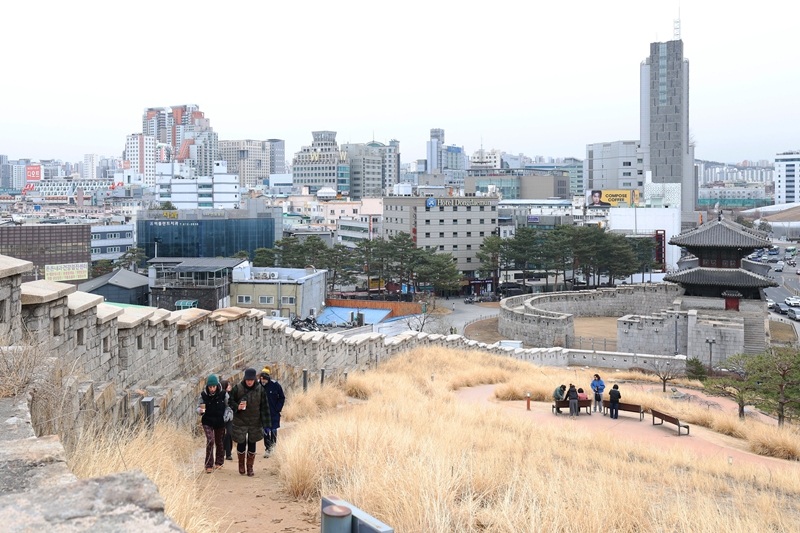
수도 행정과 생활을 감싼 한양도성 – Hanyangdoseong: surrounding capital’s administration and life
한양도성은 수도 한양의 경계를 설정하고 외부 침입을 방어하기 위해 축조된 도성 성곽이다. 14세기 후반 처음 축조된 뒤 15세기에 대대적인 개축이 이뤄졌다. 평지에 쌓은 초기 토성 구간은 석성으로 다시 쌓으며 방어 시설을 대폭 보강했다.
Hanyangdoseong (Seoul City Wall) Fortress, which defined the boundaries of the Joseon capital and defended against external invasions, was first built in the late 14th century and underwent major renovations in the 15th. The initial earth walls built on flat ground were later reconstructed with stones, greatly reinforcing the facility’s defensive structures.
전체 길이 18.6km 가운데 약 12.8km 구간이 원형 또는 복원된 상태로 이어진다. 문루와 성곽의 원형도 잘 보존돼 조선시대 도성 건축 기술과 도시 문화를 확인할 수 있다.
Measuring a combined 18.6 km long with 12.8 km in its original form or restored, the fortress has well-preserved towers and walls to provide a glimpse into the architectural know-how and urban culture in the Joseon capital.
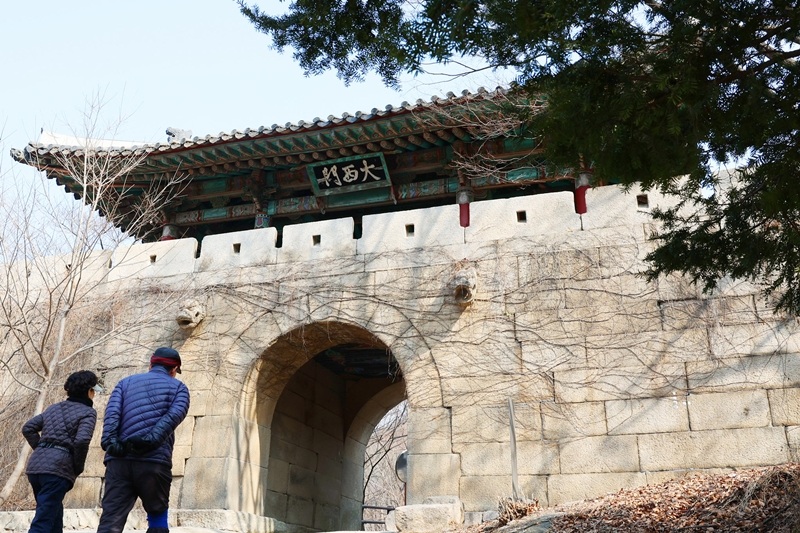
유사시를 대비한 방어 거점, 북한산성 – Bukhansanseong: stronghold in case of emergency
도성 북쪽에 축조된 북한산성은 유사시를 대비한 핵심 방어 거점이다. 북한산의 여러 험준한 봉우리를 잇는 이 성곽은 총길이 11.6㎞, 내부 면적은 약 5.3㎢에 달하는 산성 요새다. 임진왜란과 병자호란을 거치며 도성 방어의 중요성이 커지자 18세기 초 기존 토성을 석성으로 다시 세워 오늘날의 위용을 갖추게 됐다.
Built north of the capital, Bukhansanseong Fortress was used as a key stronghold in case of emergency. Connecting the rugged peaks of Bukhansan Mountain, the structure stretches 11.6 km and its internal area covers 5.3 square km.
As the capital’s defense grew in importance with the Imjin Waeran and Byeongja Horan invasions, the original parts of the fortress built with soil were rebuilt with stone in the early 18th century.
성 안에는 행궁과 군량 창고 등 다양한 군사 시설이 갖춰졌다. 99개의 우물과 26개의 소규모 저수지, 8개의 창고를 설치해 장기전에 대비했다. 유사시 국왕과 백성이 성 안으로 들어와 방어할 수 있도록 설계된 체계적 구조를 보여준다.
Within the fortress were military facilities such as a temporary palace and a military supply warehouse. The installation of 99 wells, 26 small reservoirs and eight storage venues prepared for prolonged warfare.
The systematic structure allowed the king and the people to enter and defend the capital in case of emergency.
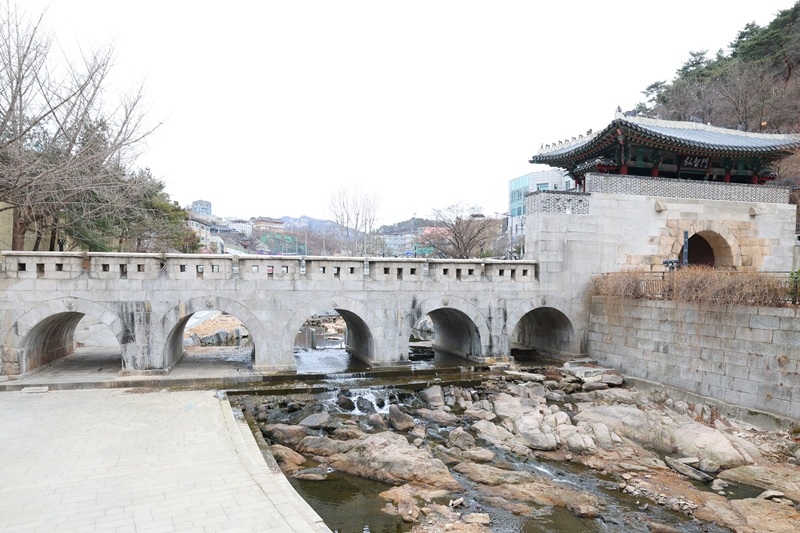
방어 체계를 완성한 연결 성곽, 탕춘대성 – Tangchundaeseong: connected fortress completing defense system
탕춘대성은 인왕산에서 북한산으로 이어지는 능선을 따라 한양도성과 북한산성 사이에 조성된 연결 성곽이다. 약 4km 길이의 이 구간은 적의 공격을 분산시키고, 도성민이 안전하게 북한산성으로 대피할 수 있도록 설계됐다.
Tangchundaeseong Fortress was a connecting wall built between Hanyangdoseong and Bukhansanseong along the ridge from Inwangsan Mountain to Bukhansan Mountain. Around 4 km long, it was designed to repel enemy attacks and allow residents to evacuate to Bukhansanseong.
성곽은 서부 방어선을 강화하는 동시에 두 성곽 간 군량과 병력을 보급하는 통로로 기능했다. 도성 방어가 어려워질 땐 조정과 백성이 북한산성으로 이동하는 전략적 연결축으로 작용했다.
Tangchundaeseong boosted the western defensive line and served as a route for military supplies and troops between Hanyangdoseong and Bukhansanseong. When defense of the capital proved difficult, it acted as a strategic link for the royal court and people to relocate to Bukhansanseong.
이로써 조선 후기 한양의 방어 체계는 평지의 도성과 산악 지역의 산성, 그리고 이를 연결하는 축이 유기적으로 결합한 조선만의 입체적인 수도성곽 체계가 완성됐다.
This completed the capital’s defense in the late Joseon period as a distinctive three-dimensional fortification system integrating the capital on the plains, fortresses in the mountains and the axis linking them.
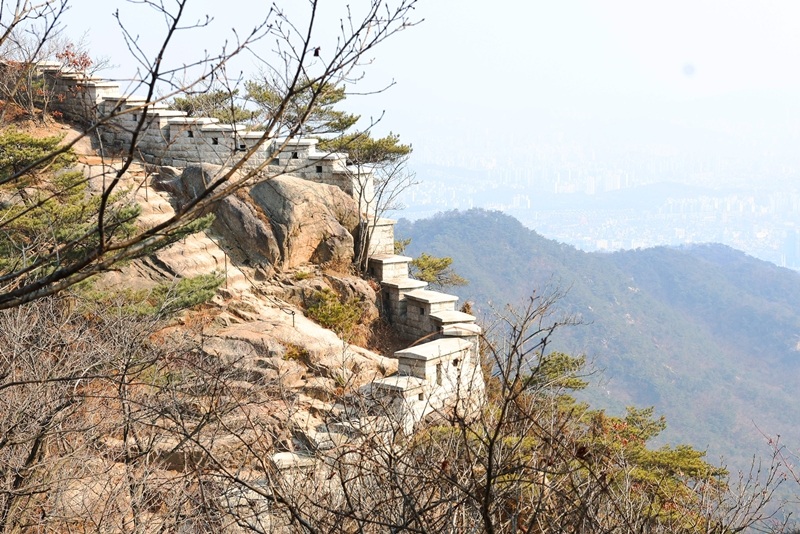
‘한양의 수도성곽’은 특정 시기에 완성된 단절된 건축물이 아니다. 14세기 말부터 18세기 초에 이르기까지 단계적으로 구축된 방어 체계다. 성벽 곳곳에 남은 서로 다른 모양의 돌들은 당시 축성 기술과 시대적 절박함을 고스란히 간직하고 있다.
The Capital Fortifications of Hanyang are not a single structure completed at a specific time but a defensive system built in stages from the late 14th to early 18th century. Stones of varying shapes remain throughout the walls, reflecting the fortification techniques and urgency of the time.
특히 산 지형을 최대한 활용하는 동북아시아 포곡식 성곽 축성 전통을 창의적으로 계승하고 한반도 수도성곽 발전 과정을 잘 드러낸다는 점에서 그 가치가 높다.
The structures have high value in creatively passing on the Northeast Asian tradition of maximizing mountainous terrain to build valley fortresses and reflecting the development of capital defense on the Korean Peninsula.
서울·고양 = 테레시아 마가렛 기자 margareth@korea.kr
사진 = 이정우 기자 b1614409@korea.kr
영상 = 박대진 기자 pacdaejin@korea.kr
By Margareth Theresia
Photos = Lee Jeongwoo
Video = Park Dae Jin

