

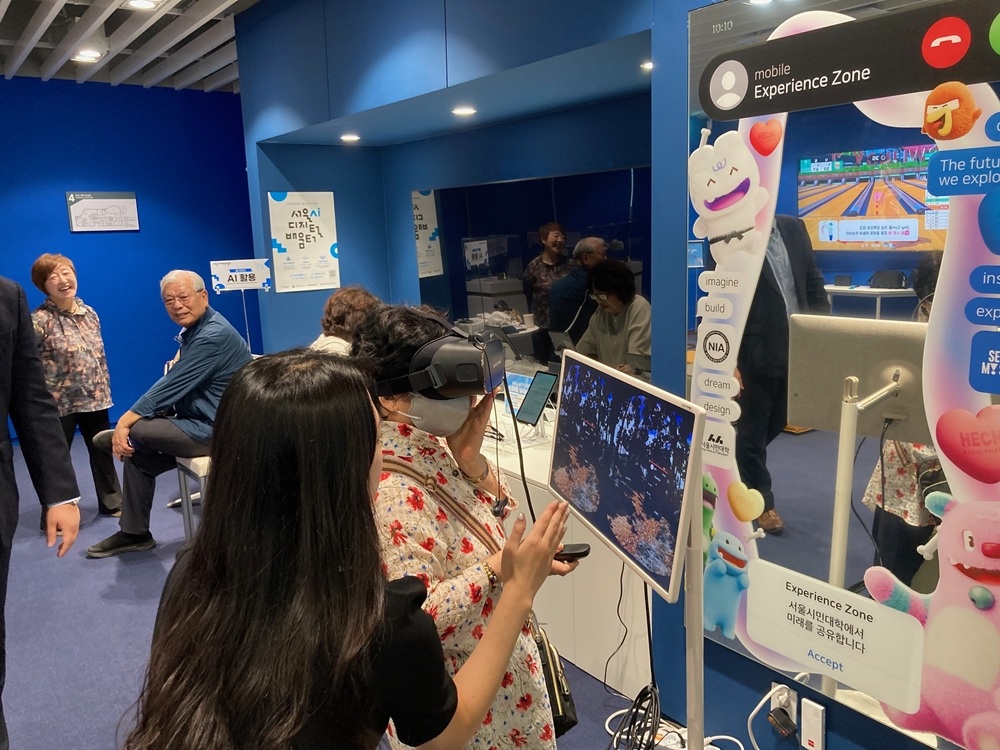
인공지능(AI)이 일상과 산업 현장에 빠르게 스며들고 있다. AI 배움터가 곳곳에서 생겨나고, 방송·미디어 산업에서는 AI를 활용해 업무 방식을 혁신하는 움직임도 활발하다.
Artificial intelligence (AI) is rapidly permeating everyday life and industrial sites, with AI learning centers emerging across the country. The broadcasting and media industry is also actively using AI to transform the way it works.
10일 과학기술정보통신부와 방송미디어통신위원회가 주관한 ‘AI디지털배움터 및 AI기반 방송·미디어 혁신 사례 프레스투어’가 진행됐다. AI를 배우는 교육 현장과 AI 기술을 실제 업무에 접목한 방송·미디어 현장을 들여다 볼 수 있는 기회였다.
On Sept. 10, the Ministry of Science and ICT and the Korea Communications Commission hosted a press tour showcasing AI Digital Learning Centers and case studies of AI-driven innovation in broadcasting and media. It was an opportunity to see firsthand how AI is taught in educational settings and applied to real-world broadcasting and media work.
오전 11시께 찾은 서울시민대학 동남권캠퍼스 AI디지털배움터. 건물 4층에 있는 배움터는 아침부터 배움의 열기로 가득했다. 지난 2020년 시작된 디지털배움터 사업은 AI와 디지털 이용에 어려움을 겪는 국민이 스마트폰, 무인 단말기(키오스크) 등을 손쉽게 사용할 수 있도록 돕고 있다. 정부는 이러한 배움터를 오는 2029년까지 229곳으로 늘릴 방침이다.
Around 11 a.m., the AI Digital Learning Center at the Southeast Campus of Seoul Lifelong Education Institute was bustling with students. Located on the fourth floor of the building, the center was filled with enthusiasm for learning from early in the morning. Launched in 2020, the Digital Learning Center program helps people who have difficulty using AI and digital technologies become more comfortable with smartphones, automated kiosks and other devices. The government plans to expand the number of such centers to 229 nationwide by 2029.
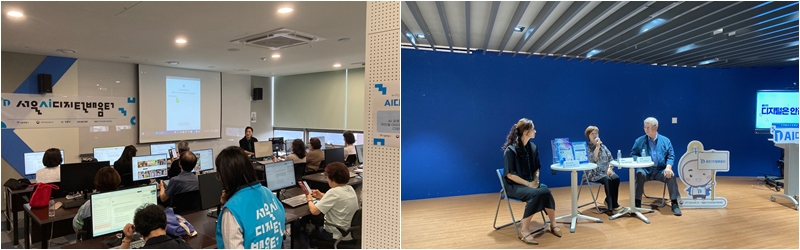
이날 수업 주제는 ‘스마트폰을 활용한 생성형 AI 영상 제작’. 손에 스마트폰을 든 교육생들이 강사의 지시에 따라 연신 화면을 터치하며 수업에 집중했다. 모르는 사항이나 궁금한 점이 있으면 수강생들이 자유롭게 손을 들었다. 그러자 보조강사가 한 명 한 명에게 다가가 자세히 설명하며 수업을 따라갈 수 있도록 도왔다. 고령자들을 배려한 맞춤형 교육이 이뤄지고 있었다.
The class that day focused on “Creating Generative AI Videos Using Smartphones.” Holding smartphones in their hands, the students followed the instructor’s directions and repeatedly tapped their screens, concentrating on the lesson. Whenever they had questions or were unsure about something, they freely raised their hands. Assistant instructors then approached each student individually, providing detailed explanations and helping them keep up with the class. The session offered tailored training designed with older adults in mind.
수업 후 만난 서종현 어르신은 “AI 기술을 배우면서 삶의 영역이 많이 넓어졌다”며 “비서 한 명을 곁에 둔 것 같은 기분”이라며 환하게 웃었다.
After the class, senior student Seo Jong-hyun said, “Learning about AI has greatly broadened the scope of my life,” adding with a bright smile, “It feels like having a personal assistant by my side.”
차한나 한국지능정보사회진흥원(NIA) 디지털역량개발팀 수석은 “AI를 실행해 자연어로 내용을 입력하면 어떠한 답변이든 해준다는 점에서 오히려 어르신들이나 디지털 취약계층에게 정말 필요한 기술”이라며 AI 활용 교육의 중요성을 강조했다.
Cha Han-na, executive principal of the Digital Competency Development Team at the National Information Society Agency (NIA), stressed the importance of AI education, saying, “Since AI can provide all kinds of answers when content is entered in natural language, it is actually a technology that is truly needed by senior citizens and digitally underserved populations.”
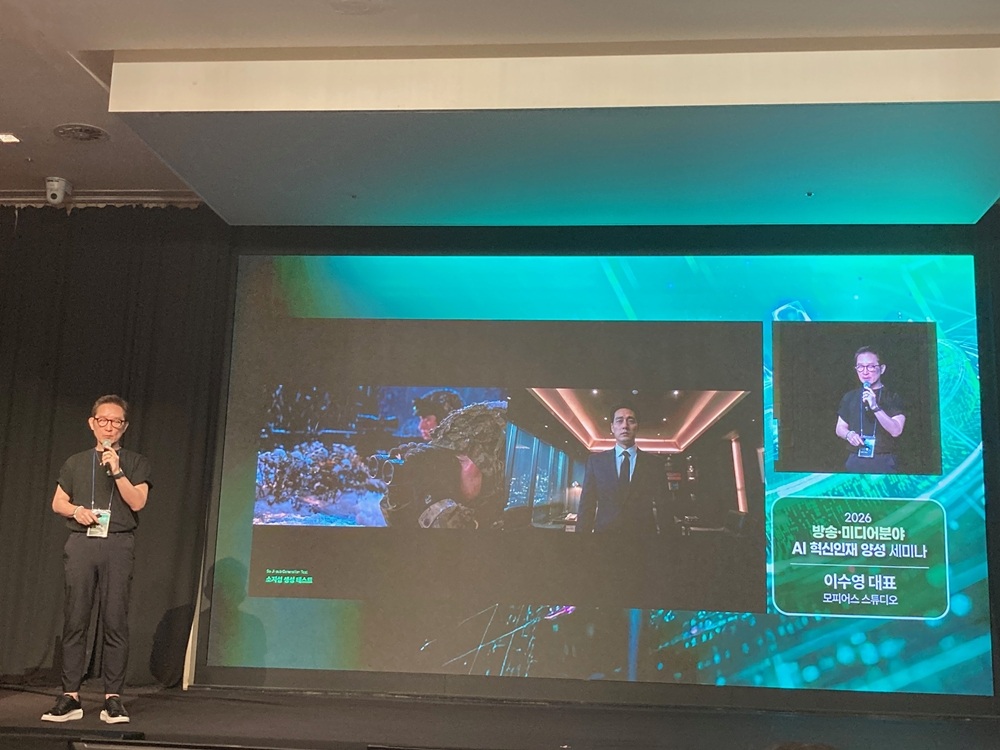
프레스투어 오후 일정으로 진행된 ‘방송·미디어 AI 혁신인재 양성 세미나’에서는 이수영 모피어스 스튜디오 대표가 발표한 ‘드라마 김부장 풀 AI 시퀀스 제작 사례’가 단연 눈길을 끌었다. 이 드라마에는 한 가지 큰 특징이 있다. 바로 실제 촬영 없이 일부 액션 장면을 ‘AI’로만 완성했다는 점이다.
The afternoon session of the press tour featured a seminar on developing innovative talent for AI in broadcasting and media. The highlight was Morpheus Studio CEO Lee Su-young’s presentation, “Producing a Fully AI-generated Sequence for the Drama ‘Manager Kim.'” The drama has one notable feature: some of its action scenes were completed entirely using AI without actual filming.
강연에서는 실제 방영된 3분 분량의 액션 장면을 보여줬고 차량이 달리는 장면, 주인공이 상대방을 제압하는 연출, 주위의 배경 등이 놀라울 정도로 자연스러웠다. 이 대표는 “대략 5회차 정도의 촬영 분량을 AI로 대체해 60% 이상의 제작비를 절감했다”고 밝혔다.
During the presentation, Lee showed a three-minute action sequence that had actually aired. Scenes of a moving vehicle, the protagonist subduing an opponent and the surrounding background all looked remarkably natural. Lee said, “AI replaced approximately five filming sessions’ worth of production and reduced production costs by more than 60%.”
특히 이 기술을 처음 시험해본 시점이 불과 지난해 11월이었다는 대목에서 취재진 사이에서도 나지막한 탄성이 나왔다. AI가 상상을 초월하는 속도로 발전하고 있다는 것을 고려하면 산업 현장에 AI가 가져올 변화는 이제 시작에 불과하다고 느낄 수 있었다.
There was a quiet gasp among the reporters when Lee revealed that the technology had first been tested only in November last year. Given the astonishing speed at which AI is advancing, it felt as though the changes AI will bring to industrial sites are only just beginning.
AI디지털배움터 교육 현장과 방송·미디어 혁신 사례를 살펴보며 AI는 시대적 흐름을 넘어 우리가 반드시 익히고 활용해야 할 도구가 됐다는 점을 실감했다. 물론 AI의 발전에 따른 부작용을 우려하는 목소리도 적지 않다. 빠르게 변하는 시대 흐름 속에서 올바른 활용법을 제시하는 교육의 역할은 더욱 중요해질 전망이다. AI가 사회와 산업에 가져다줄 혁신이 기대된다.
Looking at the AI Digital Learning Center and examples of innovation in broadcasting and media, it became clear that AI has gone beyond being a trend of the times and has become a tool that we must learn to use. Of course, there are also many concerns about the side effects of AI’s development. As the times continue to change rapidly, the role of education in teaching people how to use AI properly is expected to become even more important. There is growing anticipation for the innovations AI will bring to society and industry.
서울 = 글·사진 정의석 기자 innocence@korea.kr
By Jeong Euiseok, innocence@korea.kr
Photos = Jeong Euiseok

