

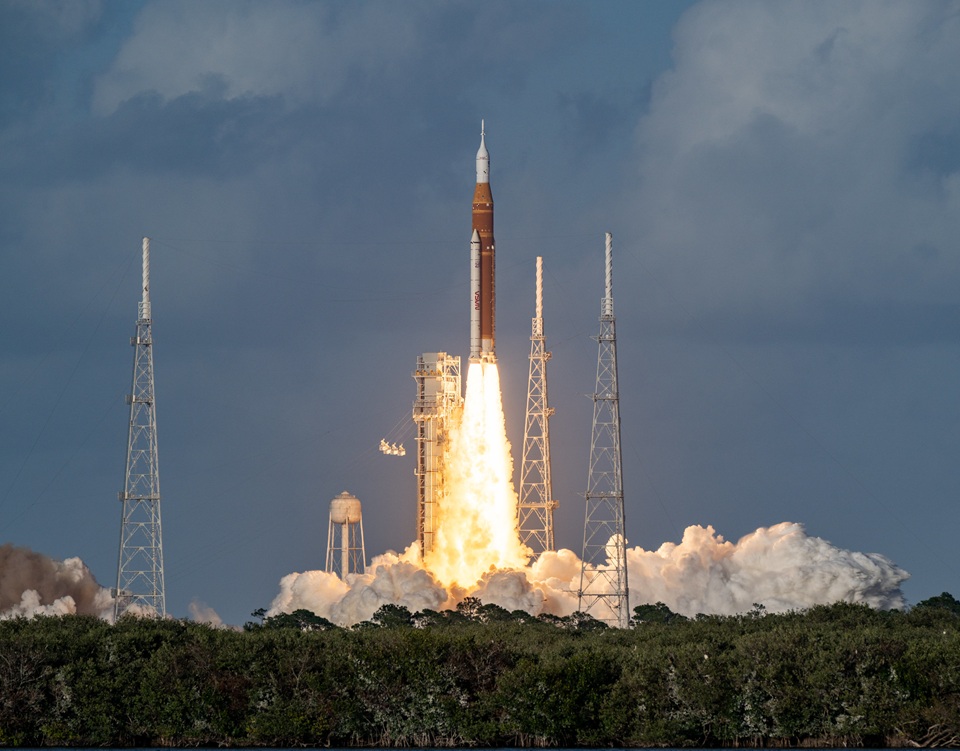
한국이 개발한 큐브위성 ‘K-라드큐브’가 1일 오후 6시 35분(현지 시간) 미국 플로리다주 케네디우주센터에서 발사된 ‘아르테미스 2호’에 실려 우주로 향했다.
K-RadCube, a domestically developed cube satellite, was launched aboard the Artemis II mission on April 1 at 6:35 p.m. from the Kennedy Space Center in Florida.
우주항공청은 이날 오후 11시 58분 K-라드큐브가 고도 약 4만km에서 성공적으로 분리돼 지구 고궤도에 진입했다고 밝혔다.
The Korea AeroSpace Administration said that at 11:58 p.m. that day, K-RadCube successfully separated at an altitude of about 40,000 km and entered a high Earth orbit.
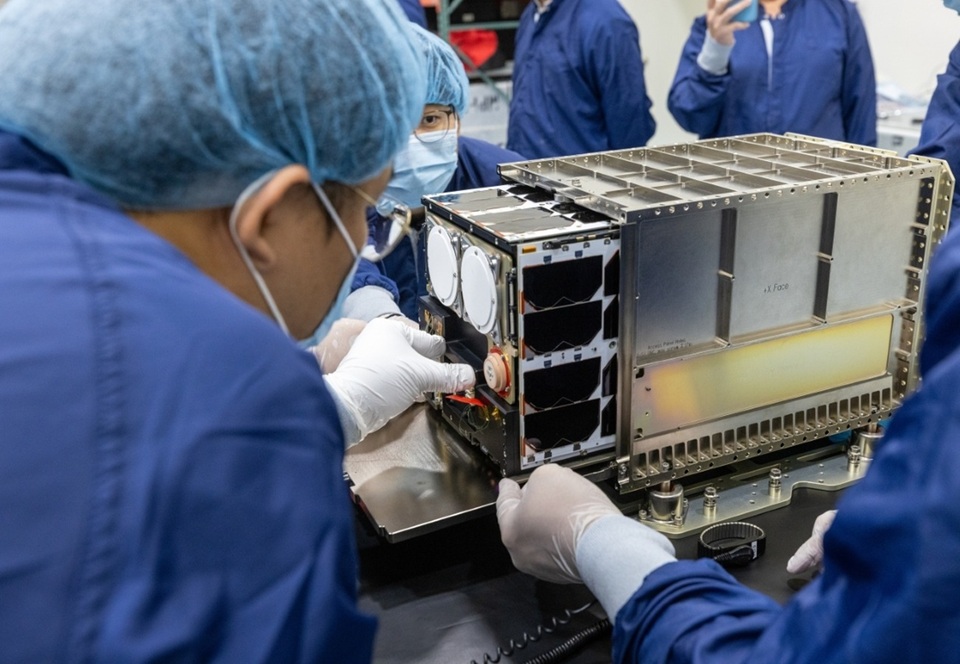
K-라드큐브는 지구 고타원궤도(High Earth Orbit)에서 우주 방사선 특성을 관측한다. 향후 유인 달 탐사와 심우주 탐사에 필수적인 방사선 위험 평가 기초 자료를 확보할 방침이다. 한국이 참여하는 아르테미스 프로젝트의 첫 유인 탐사 관련 실전 임무다.
K-RadCube observes space radiation from a highly elliptical orbit to gather key data for radiation risk assessment, which is essential for future manned lunar and deep space exploration.
This marks Korea’s first practical mission related to a manned Artemis project.
K-라드큐브는 고도 약 200 km에서 약 7만km에 이르는 광범위한 범위의 궤도를 비행하며 반앨런대(Van Allen belts) 안팎을 오가면서 다양한 방사선 환경에서 고에너지 입자의 분포와 특성을 관측한다.
The satellite flies in a wide orbit ranging from about 200 km to 70,000 km, moving in and out of the Van Allen belts to observe the distribution and characteristics of high-energy particles in various radiation environments.
위성에는 삼성전자와 SK하이닉스의 반도체가 탑재돼 극한 우주 환경에서 방사선에 노출된 반도체의 내구성을 실증하는 임무도 수행한다.
Equipped with semiconductors from Samsung Electronics and SK Hynix, the satellite will also test the durability of chips exposed to radiation in extreme space environments.
우주항공청은 K-라드큐브의 임무운영센터에서 위성으로부터 데이터를 확보하기 위해 스페인 마스팔로마스(Maspalomas) 지상국을 통해 교신을 시도하고 있다고 밝혔다. 칠레 푼타 아레나스(Punta Arenas), 미국 하와이, 싱가폴 등의 지상국과도 연계해 위성 신호를 추적한다.
KASA said it is attempting communication via the Maspalomas ground station in Spain to obtain data from the satellite.
It is also tracking signals through coordination with stations in Punta Arenas (Chile), Hawaii (U.S.) and Singapore.
샤를 오두앙 기자 caudouin@korea.kr
사진 = 미국항공우주국(NASA)
By Charles Audouin, caudouin@korea.kr
Photos = NASA

