

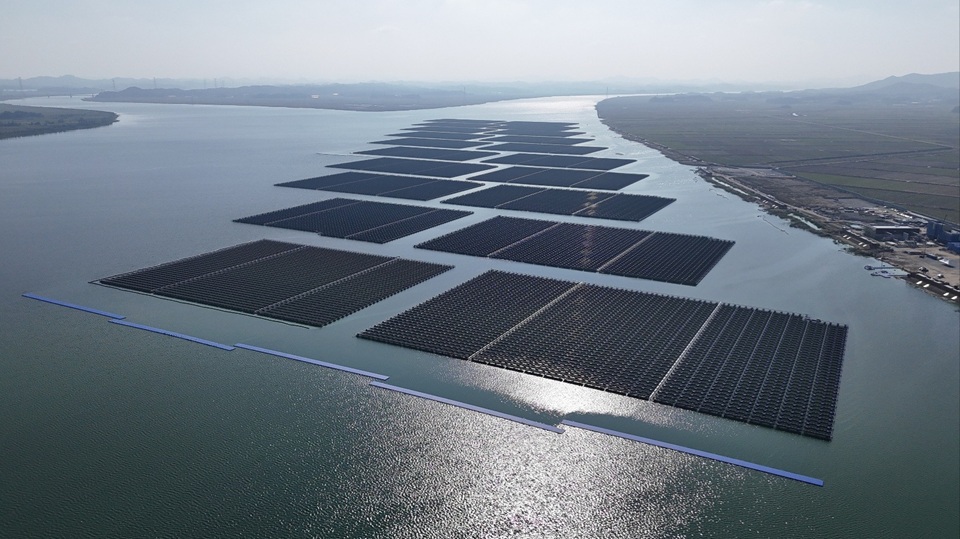
기후에너지환경부가 29일 국무회의에서 2030년까지 재생에너지 100GW 이상 보급하기 위해 전력망 시스템을 재설계하는 ‘전력망 혁신대책’을 보고했다.
The Ministry of Climate, Energy and Environment on Sept. 29 announced a plan for power grid innovation at a Cabinet meeting to redesign the power grid system to raise renewable energy capacity to over 100 gigawatts (GW) by 2030.
이번 대책으로 2030년 재생에너지 수용량이 송전 기준 119GW에서 171GW로, 배전 기준 84GW에서 110GW로 늘어날 것으로 기대된다.
This is expected to raise the country’s ability to host renewable energy by 2030 from 119 GW to 171 GW for transmission and from 84 GW to 110 GW for distribution.
대책의 핵심은 에너지저장장치(ESS)를 활용해 재생에너지 접속 여력을 늘리는 데 있다. 태양광 출력이 수용량을 초과할 때 일시적으로 출력을 제어하는 유연접속을 도입해 배전선로의 태양광 접속량을 현재 14MW에서 16MW로, 변전소는 50MW에서 60MW로 각각 확대한다. 추가 전력망 건설 없이도 호남에서만 태양광 2.6GW를 더 받을 수 있게 된다.
The crux of the plan is to raise the capacity to connect renewable energy sources by utilizing energy storage systems (ESS). The launch of “flexible connection,” which temporarily curtails solar power generation when output exceeds capacity, will boost solar power volume linkable to distribution lines from 14 megawatts (MW) to 16 MW and to substations from 50 MW to 60 MW.
This will allow the southwestern Honam region, which spans Gwangju and the two Jeolla-do provinces, to take in 2.6 GW more of solar power without the need for more power grid infrastructure.
사업자가 접속용량보다 큰 설비를 짓고 에너지저장장치(ESS)로 출력을 조절하는 자율접속 제도도 시범사업을 거쳐 내년 도입한다.
A system allowing utilities to build facilities with a capacity greater than their connection limit and regulate output using ESS is also set for launch next year after a pilot program.
접속 검토 기준도 바꾼다. 지금부터 신규 재생에너지가 석탄·액화천연가스(LNG) 발전소보다 우선 발전하는 것으로 접속 기준을 적용한다. 이렇게 하면 화력발전소가 몰린 영남·강원 등에서 2030년까지 재생에너지 20GW를 더 수용할 수 있다.
The criteria for reviewing grid connections will also undergo revision. New facilities for renewable energy now take priority over coal and liquefied natural gas power plants in grid connection selection.
This is expected to allow an additional 20 GW of renewable energy by 2030 in Yeongnam, the southeastern region covering Busan, Daegu, Ulsan and the two Gyeongsang-do provinces, and Gangwon-do Province, where thermal power plants are concentrated.
기후에너지환경부는 “반도체 산단 등 메가프로젝트의 안정적 전력 공급을 위해서 전력망 적기 구축이 시급하다”며 “발전력을 수요지로 수송할 전력망 인프라 확충이 필요하다”고 설명했다.
“The timely construction of power grids is urgently needed to ensure stable power supply for megaprojects such as semiconductor industrial complexes,” the ministry said. “We must expand power grid infrastructure to transmit electricity from power generation sites to areas of demand.”
샤를 오두앙 기자 caudouin@korea.kr
By Charles Audouin, caudouin@korea.kr

